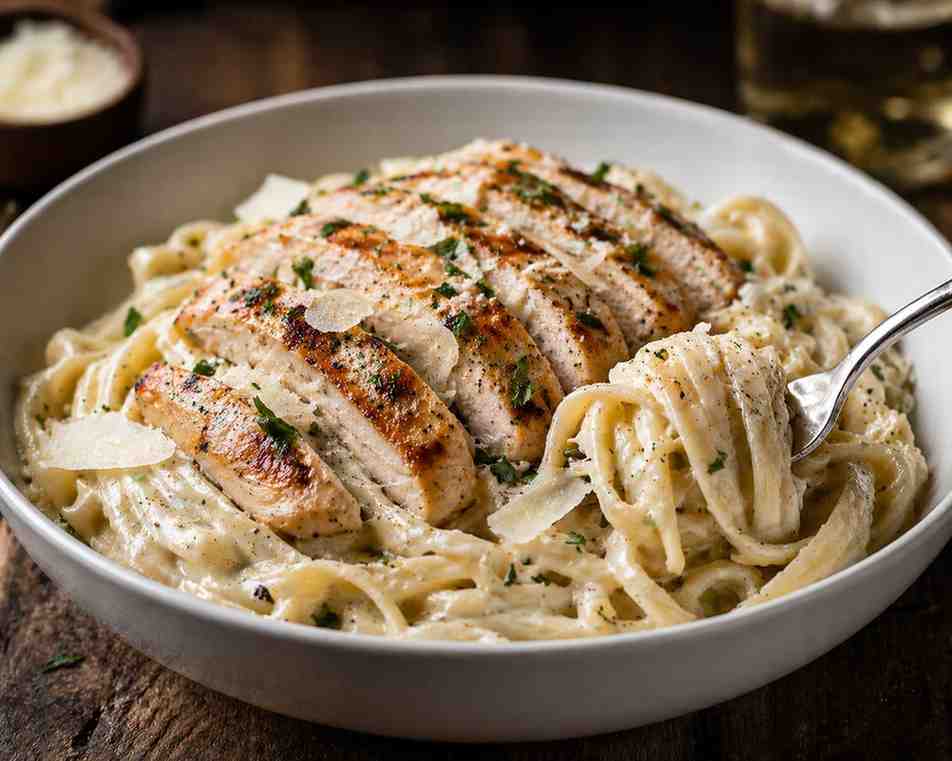

Discover the secret techniques behind chicken alfredo
If your Alfredo sauce keeps breaking too, then this recipe is for you. Chicken Alfredo is actually a very easy and perfect recipe that can be made at home quite easily, restaurant style. You just need to follow a few important tricks and tips while making it. I also had to try many times before finally discovering these helpful tricks.
Over the years I have made this dish dozens of times — in a full kitchen, in a hotel room with a small hot plate, and even outdoors using a portable burner. What I discovered along the way is that a great simple chicken alfredo recipe is not about fancy equipment or rare ingredients. It is about understanding a few small but important techniques.
What makes a chicken alfredo recipe actually work
The first time I made chicken alfredo, I followed a recipe that called for bottled alfredo sauce. The result was heavy, overly salty, and one-dimensional. So I started from scratch and began building my own version using just four core ingredients: butter, heavy cream, parmesan, and garlic.
What I found was that the magic happens in the order and the timing. I add the butter first over medium-low heat, then the garlic, and I let it bloom for about 60 seconds before pouring in the cream. This one step — letting the garlic soften in butter before anything else touches the pan — completely transforms the depth of flavour.
| Chef Mehmoona’s tip Use freshly grated parmesan, not the pre-shredded kind in a bag. Pre-shredded cheese contains anti-caking agents that cause the sauce to go grainy. I learned this the hard way after three failed batches. |
The ingredients I use for my chicken alfredo
I keep this recipe intentionally simple. Here is what goes into my version:
| Fettuccine pasta400g / about 14oz | Chicken breast2 medium, boneless |
| Heavy cream1 cup / 240ml | Unsalted butter3 tablespoons |
| Garlic cloves3, finely minced | Parmesan cheese1 cup, freshly grated |
| Salt & black pepperto taste | Fresh parsleyfor garnish, optional |
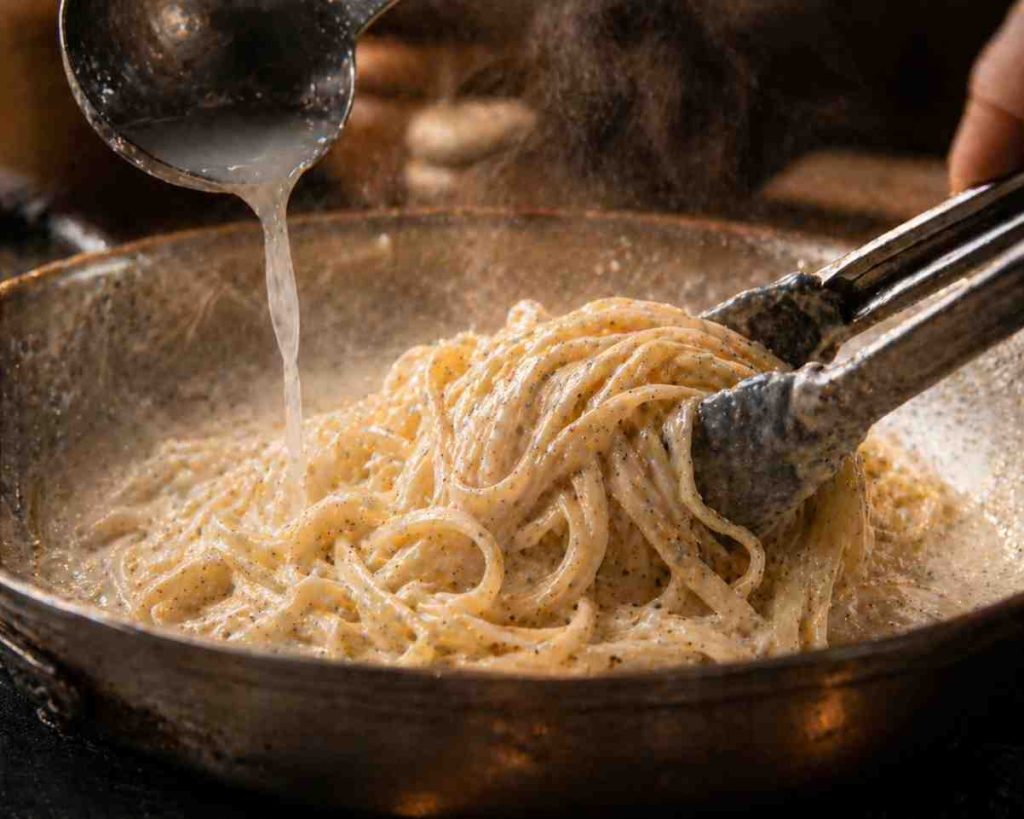
You will notice there is no flour in my list. I do not use a roux for this sauce. The pasta water does the thickening work naturally — something I discovered after reading about traditional Italian pasta techniques. I always reserve about half a cup of pasta cooking water before I drain the noodles, and I add it one splash at a time if the sauce needs loosening.
How I cook the chicken for chicken alfredo
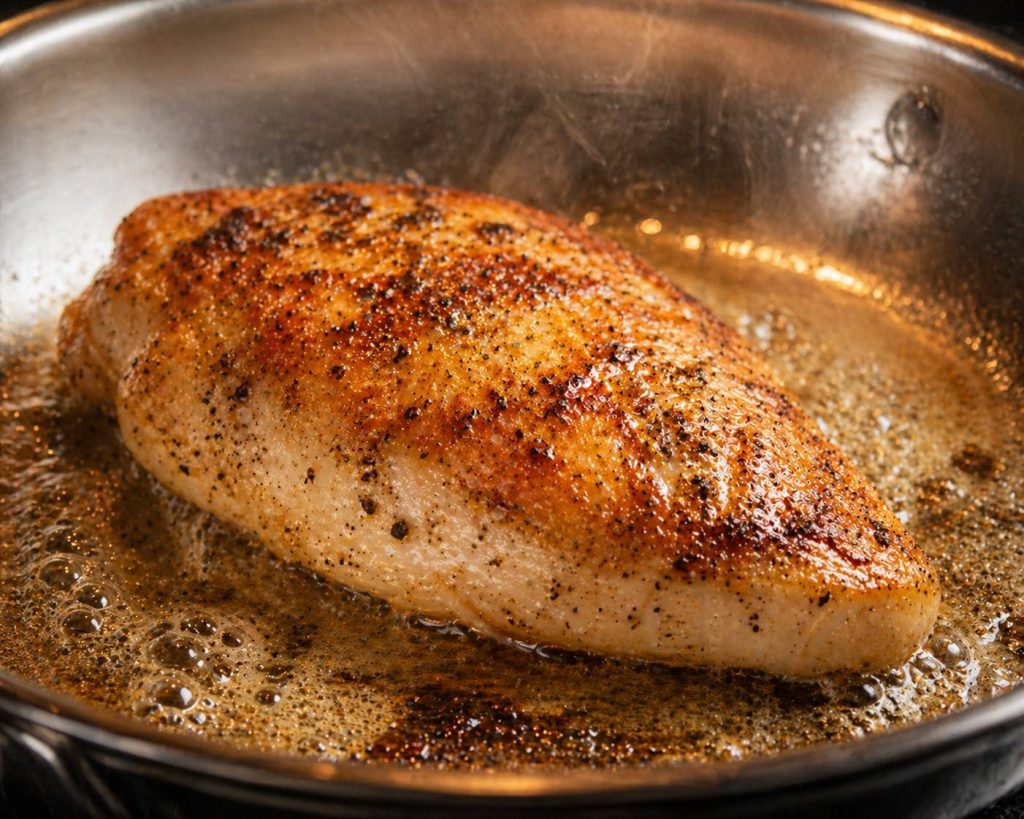
The chicken is where a lot of home cooks lose confidence. I used to slice mine before cooking, which made it dry out very quickly. Now I cook the chicken breasts whole, and here is exactly what I do.
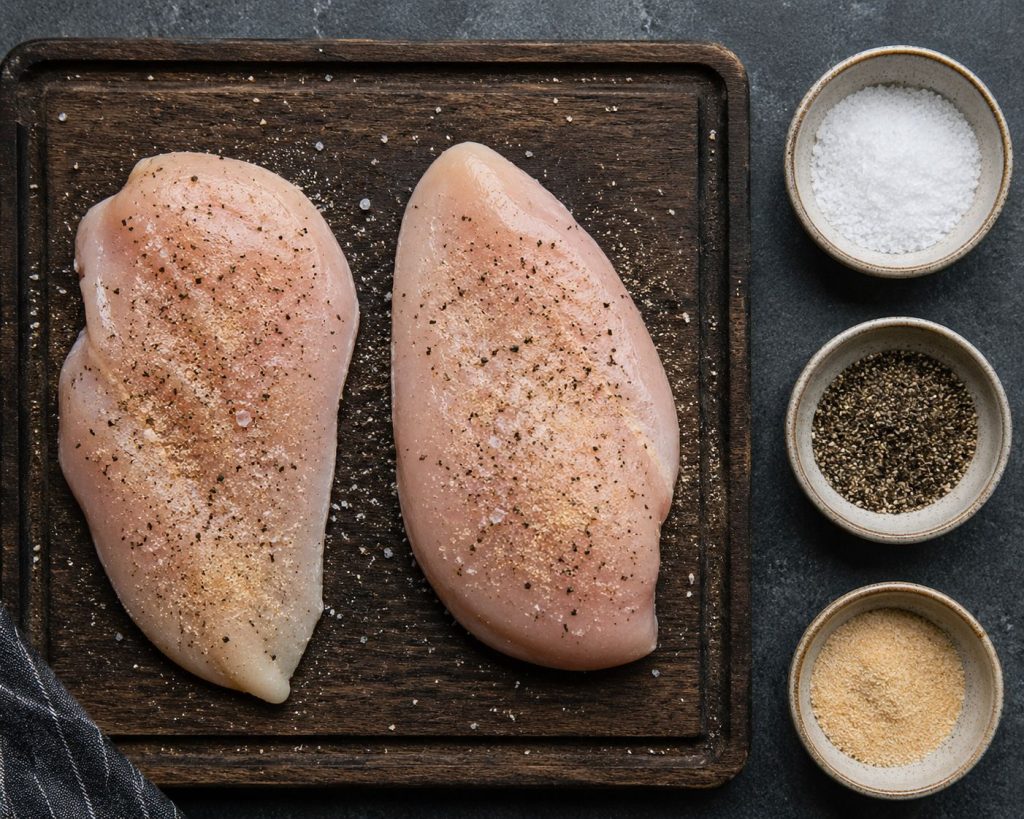
I season both sides generously with salt, pepper, and a small pinch of garlic powder. Then I heat a tablespoon of butter in my pan over medium-high heat and place the chicken in flat. I do not touch it for four to five minutes. I let it develop a golden crust before I flip it. Once I flip, I reduce the heat to medium and cook for another four to five minutes depending on thickness.
After it comes off the heat, I let the chicken rest on a board for at least five minutes before I slice it. This resting step is non-negotiable in my kitchen. When I skip it, the juices run out immediately and I am left with dry, stringy pieces on top of my pasta. When I wait, the chicken stays juicy and tender even after I add it to the sauce.
| Pro tip I use the same pan I cooked the chicken in to make the alfredo sauce. All those caramelised bits stuck to the pan? They melt into the butter and cream and add flavour you simply cannot replicate by starting fresh. |
Making the creamy alfredo sauce — step by step
Once the chicken is resting, I reduce the heat in the pan to medium-low. I add my butter and as soon as it melts I add the minced garlic. I stir it gently and watch it carefully — garlic burns faster than you expect, and burnt garlic will make the whole sauce bitter. After about a minute, when I can smell it turning fragrant and the garlic has softened slightly, I pour in the cream.
I stir continuously and let the cream come to a gentle simmer — not a rolling boil. I keep it at this low simmer for three to four minutes until it reduces slightly and starts coating the back of a wooden spoon. Then I remove the pan from heat entirely before adding the parmesan.
This off-heat step is something I discovered after my sauce kept turning gritty. Heat above a certain temperature causes parmesan proteins to seize up. By taking the pan off the burner first, then adding the cheese and stirring quickly, I get a sauce that is smooth, glossy, and coats the pasta beautifully every single time.
Putting the chicken alfredo together
I add the drained fettuccine directly into the sauce pan and use tongs to toss everything together. If the sauce feels too thick, I add a small splash of my reserved pasta water and toss again. The starchy water emulsifies into the cream and makes the whole thing silky rather than gluey.
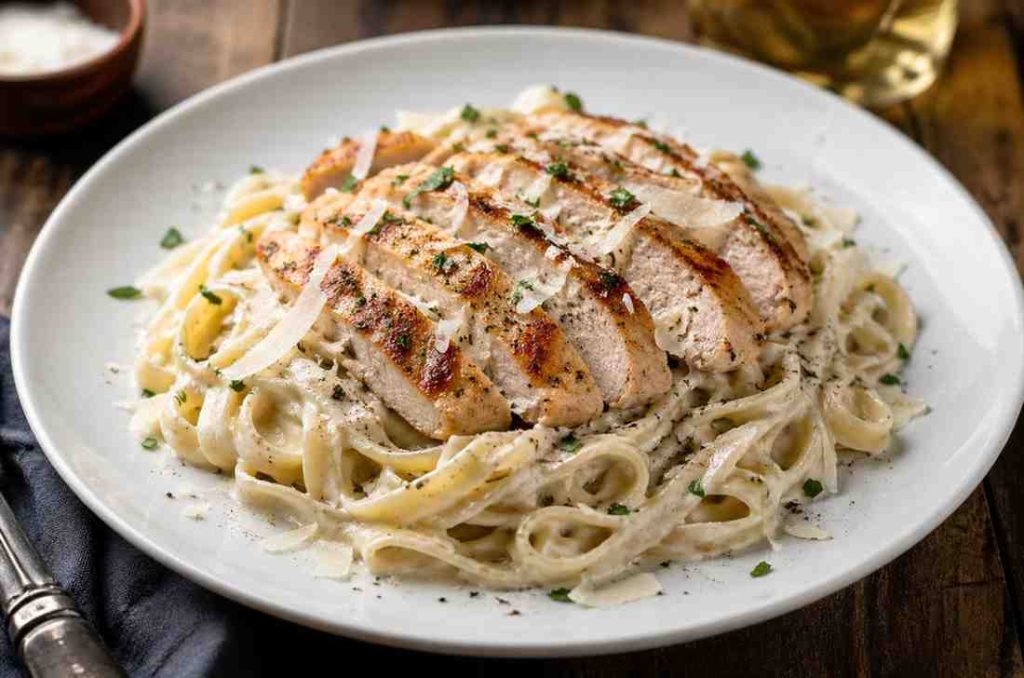
Then I add the sliced chicken on top — or sometimes I fold half of it through the pasta and lay the rest on top for presentation. A handful of fresh parsley goes on at the end, and I finish with a small extra grating of parmesan and a twist of black pepper.
For more inspiration on classic pasta dishes and their history, take a look at my guide on pasta recipes from tradition to today — it gives great context on how these creamy sauces evolved and what makes them special.
Variations I have tested and liked
Once you have the base simple chicken alfredo recipe dialled in, there is a lot of room to play. Here are a few of my favourite tweaks:
Add spinach: I throw in two large handfuls of baby spinach right before the pasta goes in. It wilts in about 30 seconds and adds colour and a slight earthiness that balances the richness of the cream.
Use penne instead of fettuccine: When I do not have fettuccine at home, I use penne and it works just as well. The sauce clings inside the tubes and every bite has the same amount of creaminess.
Make it gluten-free: I have made this with gluten-free pasta several times. The key is to slightly undercook the pasta by about a minute since gluten-free pasta gets mushy faster, and it finishes cooking in the sauce.
Campfire or hot plate version: I have made this on a single-burner camp stove and it works perfectly. You just cook the chicken and sauce in the same small pan one step at a time, and boil the pasta in a separate pot. The technique does not change at all.
Classic vs. Modern: How They Compare
| Feature | Roman Original Authentic | American Classic Popular | Modern Lightened Trending |
|---|---|---|---|
| Base | Butter + pasta water | Heavy cream + butter | Cauliflower or Greek yogurt |
| Cheese | Aged Parmigiano-Reggiano | Parmesan (any grade) | Nutritional yeast or reduced Parmesan |
| Protein | None | Grilled or sautéed chicken | Chicken breast, shrimp, or tofu |
| Pasta | Fresh fettuccine (egg) | Dried fettuccine | Whole wheat, chickpea, or zucchini noodles |
| Richness | Moderate | High | Low to moderate |
Nutrition at a Glance
A standard restaurant-style serving of chicken alfredo (about 400g) carries a significant caloric load — worth knowing if you’re watching intake. Here’s what a typical serving contains:
| 820 Calories | 42g Protein | 48g Fat | 62g Carbs | 680mg Sodium |
Lightened versions using cauliflower cream sauce can cut calories by 40% while preserving that rich mouthfeel — a trade worth considering for weeknight cooking.
5 Pro Tips for the Best Chicken Alfredo
| Use the right Parmesan Buy a wedge of Parmigiano-Reggiano and grate it yourself. The difference in flavor is not subtle. | Save your pasta water Starchy pasta water is the emulsifier that keeps your sauce silky, not broken. | High heat on chicken A golden sear adds flavor that simply can’t be replicated by any seasoning or sauce. |
| Finish pasta in the sauce Toss cooked pasta directly into the sauce pan — it absorbs flavor and binds everything together. | Never reheat over high heat Gentle, low heat with a splash of water or cream prevents the sauce from breaking on leftovers. |
Frequently asked questions
Why does my alfredo sauce get watery?
This usually happens when the pasta is too wet when it goes into the sauce, or when the sauce is overcooked at too high a temperature. Make sure you drain the pasta well and keep the heat at medium-low when you combine everything. Adding pasta water gradually — not all at once — also helps control the consistency.
Can I use milk instead of heavy cream?
I have tried it with whole milk and while the sauce is lighter, it does not reduce as well and can turn watery. If you need a lighter version, I recommend using half heavy cream and half whole milk rather than swapping entirely.
How do I reheat chicken alfredo without the sauce breaking?
I always reheat mine on the stovetop over low heat with a splash of water or cream added to the pan. Microwave reheating tends to overheat the sauce unevenly and causes it to separate. Low and slow with a little added liquid brings it right back.
Can I make chicken alfredo ahead of time?
The sauce is best fresh, but you can cook the chicken and make the sauce separately ahead of time. Store them in the fridge for up to two days and combine with freshly cooked pasta when you are ready to serve.